
Most parents know they should take their child to the dentist, but are not always sure exactly when, how often, or what signs should prompt an earlier visit. Getting this right matters more than many people realize. The habits and conditions that develop in childhood have a direct impact on oral health well into adulthood.
Finding a trusted pediatric dentist Toronto families can rely on is one of the most important steps you can take for your child’s long-term oral health. This guide helps parents understand when that visit is the right call, what signs to watch for, and what children’s dentistry actually involves, so you feel prepared rather than uncertain.
When Should a Child First See a Pediatric Dentist Toronto Parents Should Know About
The general recommendation from dental professionals is that a child should have their first dental visit by the time their first tooth appears or by their first birthday, whichever comes first. This may seem early to many parents, but there are good reasons for it.
Early visits allow a kid’s dentist in Toronto parents trust to monitor the development of the teeth and jaw from the start. They also give parents practical guidance on feeding habits, thumb sucking, pacifier use, and how to clean an infant’s teeth properly. Perhaps most importantly, early visits help children become comfortable in a dental setting before any treatment is ever needed, which significantly reduces dental anxiety later in life.
If your child is past their first birthday and has not yet seen a dentist, that is not a reason for concern. The important thing is to get started and establish a routine as soon as possible.
Signs Your Child Should See a Pediatric Dentist in Toronto Soon
Beyond routine checkups, there are specific signs that suggest your child needs to see a pediatric dentist Toronto sooner rather than later.
Visible White Spots or Dark Areas on Teeth
White spots on a child’s teeth can be an early sign of tooth decay. Dark spots or visible holes are a more advanced sign that decay is already present. Both warrant a prompt dental visit. Early decay in baby teeth is more common than many parents expect and can progress quickly if not addressed.
Complaints of Tooth Pain or Sensitivity
If your child is telling you that a tooth hurts or that eating certain foods causes discomfort, do not wait for the next routine checkup. Tooth pain in children is rarely something that resolves on its own. It usually indicates decay, an infection, or another issue that needs attention from a kids’ dentist in Toronto as soon as possible.
Swollen or Bleeding Gums
Healthy gums in children should be firm and pink. If you notice swelling, redness, or bleeding when your child brushes, this could be a sign of early gum disease or improper brushing technique. A dentist can assess the cause and guide the correct approach to oral hygiene for your child’s age.
Teeth Coming in Crooked or Crowded
Some degree of variation in how teeth come in is normal. However, if teeth appear significantly crowded, overlapping, or coming in at unusual angles, a dental assessment is worthwhile. Early identification of alignment concerns allows for timely intervention if needed and can simplify any orthodontic treatment that may be required later.
Thumb Sucking or Pacifier Use Beyond Age Three
Thumb sucking and pacifier use are normal in infants and toddlers. However, if these habits continue past the age of three, they can start to affect the development of the teeth and jaw. A pediatric dentist Toronto parents consult can assess whether any impact is occurring and advise on how to manage the habit effectively.
Delayed Tooth Eruption
Most children begin getting their first teeth between six and twelve months. If your child has reached their first birthday with no sign of teeth, or if teeth seem significantly delayed compared to typical development, a dental visit can help rule out any underlying concerns.
Bad Breath That Persists
Occasional bad breath in children is normal, especially in the morning. However, persistent bad breath that does not improve with regular brushing can be a sign of tooth decay, gum issues, or other oral health concerns that a dentist should evaluate.
What Is the Difference Between a Pediatric Dentist and a General Dentist
This is a question many parents ask. A general dentist can treat patients of all ages, including children. A pediatric dentist, Toronto specialists have completed additional years of specialized training focused specifically on the oral health of infants, children, and teenagers.
Pediatric dentists are also trained in child psychology and behaviour management, which means they are particularly skilled at creating a calm and positive experience for children who may be nervous or uncooperative. Their clinics are typically designed with children in mind, which also helps put young patients at ease.
For children with specific developmental needs, significant dental anxiety, or complex dental concerns, seeing a specialist in children’s dentistry in Toronto is often the better choice. For routine care, a family dentist Toronto who sees patients of all ages can be an equally good option for many families.
What Happens During a Child’s Dental Visit
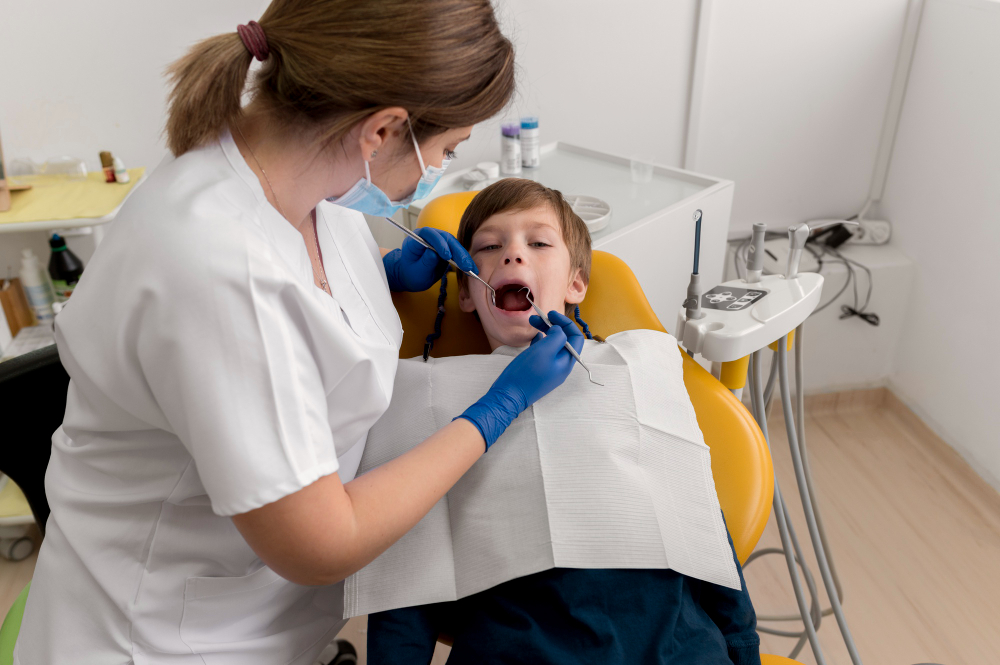
Understanding what to expect can help both parents and children feel less anxious about the appointment. A routine visit to a dental clinic near you for a child typically includes:
- A gentle examination of the teeth, gums, jaw, and bite
- A check for signs of decay, crowding, or developmental concerns
- A professional cleaning to remove any plaque or tartar buildup
- Fluoride treatment is recommended based on the child’s age and risk level
- Guidance for parents on home care, diet, and habits that affect oral health
The visit is designed to be calm and unhurried. For very young children, the first few visits are often focused simply on getting comfortable in the chair and building a positive association with dental care.
How to Prepare Your Child for Their First Dental Visit
The way you talk about the dentist at home significantly influences how your child feels about going. Here are a few practical suggestions:
- Use simple, positive language when explaining what will happen
- Avoid words like “hurt”, “needle”, or “drill” which can create unnecessary fear
- Read books or watch short videos about dental visits aimed at children
- Play pretend dentist at home to make the experience feel familiar
- Praise your child for being brave rather than focusing on their anxiety
Finding a dental clinic near you that has experience with young patients and a child-friendly environment makes a noticeable difference in how the first visit goes.
How Often Should Children See a Dentist
For most children, a dental visit every six months is the standard recommendation. This frequency allows the dentist to monitor development closely, catch any issues early, and reinforce good oral hygiene habits at each visit.
Some children may need to be seen more frequently if they have a higher risk of cavities, are undergoing orthodontic treatment, or have specific oral health concerns that require closer monitoring.
Establishing a consistent routine early sets children up for a lifetime of better oral health. Children who attend regular checkups with a family dentist Toronto families trust are significantly less likely to develop serious dental problems as they get older.
Frequently Asked Questions
At what age should a child first see a pediatric dentist Toronto?
The recommendation is by the first birthday or when the first tooth appears. Starting early helps establish good habits and allows the dentist to monitor development from the beginning.
Are baby teeth really that important if they fall out anyway?
Yes. Baby teeth hold space for permanent teeth and play an important role in speech development, chewing, and jaw development. Decay in baby teeth can also spread and affect the permanent teeth developing underneath.
What if my child is afraid of the dentist?
Dental anxiety in children is very common. Choosing a dental clinic near you that specializes in children’s dentistry in Toronto and has a calm, welcoming environment can make a significant difference. Speaking positively about dental visits at home also helps.
Can a general dentist treat my child, or do I need a pediatric dentist in Toronto?
Many general dentists see children regularly and provide excellent care. A pediatric dentist in Toronto has additional specialized training and may be a better fit for children with significant anxiety, complex needs, or specific developmental concerns.
How can I help my child maintain good oral health at home?
Brush your child’s teeth twice daily with an age-appropriate toothbrush and fluoride toothpaste. Limit sugary drinks and snacks, encourage water as the main beverage, and make dental visits a regular part of your family’s health routine.
How do I find a reliable dental clinic near me for my child in Toronto?
Look for a clinic that offers children’s dentistry Toronto families trust, has flexible appointment times, and creates a welcoming environment for young patients. Checking reviews and asking for recommendations from other parents in your area is also a good starting point.
Starting Early Makes All the Difference
Children’s dentistry in Toronto is about far more than treating problems when they arise. It is about building a foundation of good oral health that supports your child through every stage of development. The earlier you establish a routine with a trusted pediatric dentist Toronto families recommend, the more comfortable your child becomes with dental care, and the better equipped they are to maintain healthy teeth and gums for life.
Knowing the signs that warrant an early visit and understanding what to expect from children’s dentistry makes the whole process less daunting for both parents and children alike. At Roseland Dental, every visit is designed to be a comfortable and positive experience from the very first appointment.