
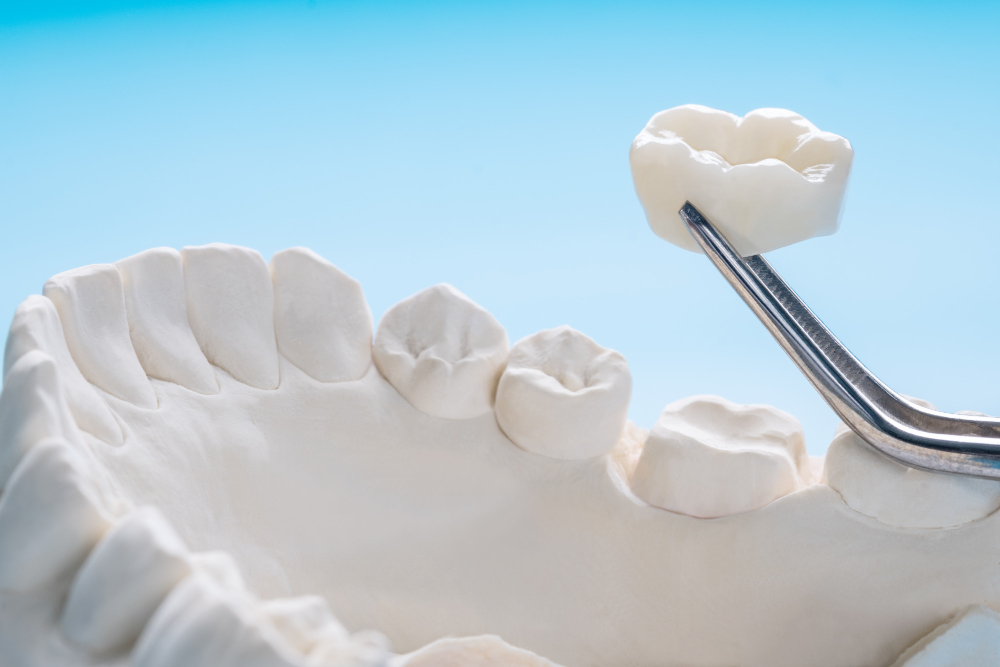
When a dentist tells you that you may need a crown or a bridge, it is easy to feel unsure about what that actually means. Both are common restorative dental treatments, but they serve different purposes and are recommended for different situations. For patients considering crowns and bridges in Toronto, understanding the differences can help you feel more confident for your appointment and better prepared to ask the right questions.
This guide breaks down what dental crowns and bridges are, how each one works, and what factors typically determine which treatment is the right fit.
What Is a Dental Crown?
A dental crown is a tooth-shaped cap that is placed over a damaged or weakened tooth. It covers the entire visible portion of the tooth above the gum line, restoring its shape, size, strength, and appearance.
For anyone considering a dental crown in Toronto, this treatment is typically recommended when a tooth is:
- Severely decayed, but still has a healthy root
- Cracked or fractured
- Worn down significantly
- Weakened after a root canal treatment
- Misshapen or severely discoloured
The crown essentially becomes the new outer surface of the tooth. Once it is placed and bonded, it functions just like a natural tooth. In most cases, you can bite, chew, and speak normally without any discomfort.
Dental crowns are custom-made to match the colour and shape of your surrounding teeth, so the result looks natural and blends in well with your smile.
What Is a Dental Bridge?
A dental bridge is used when one or more teeth are completely missing. As the name suggests, it bridges the gap left by the missing tooth by anchoring an artificial tooth between two crowns placed on the neighbouring teeth.
The teeth on either side of the gap, called abutment teeth, are reshaped slightly to support the crowns. The artificial tooth in the middle, known as a pontic, is then fused between the two crowns, creating a fixed and stable replacement.
For patients considering a dental bridge in Toronto, this treatment is commonly recommended when:
- One or more adjacent teeth are missing
- The surrounding teeth are healthy enough to serve as anchors
- A fixed, non-removable solution is preferred
- A dental implant is not suitable or preferred at this time
A bridge not only fills the visible gap but also helps maintain the alignment of your remaining teeth. When a tooth is missing, the surrounding teeth can gradually shift into the space, leading to bite problems and changes in facial structure over time.
Crowns and Bridges in Toronto: Key Differences
Understanding the distinction between the two becomes clearer when you look at the core purpose of each treatment. Whether you are exploring a dental crown or a dental bridge in Toronto, the right choice depends entirely on your specific situation.
Purpose
A crown is used to restore a tooth that is still present but too damaged to function properly on its own. A bridge is used to replace a missing tooth.
Number of Teeth Involved
A crown typically involves a single tooth. A bridge involves at least three teeth: the two anchor teeth and the artificial tooth in between.
Procedure
For a dental crown in Toronto, the dentist reshapes the existing damaged tooth, takes an impression, and places a custom-made cap over it. For a dental bridge in Toronto, the process is similar but involves preparing two anchor teeth and creating a connected unit that spans the gap.
Bone Preservation
One important distinction is that a bridge does not prevent bone loss in the area where the tooth is missing. Over time, the jawbone in that area can gradually shrink. A dental implant, on the other hand, helps preserve bone. If long-term bone health is a concern, your dentist may discuss implants as an alternative worth considering.
Which One Do You Actually Need?
The answer depends entirely on your specific dental situation. Here are some general scenarios to help clarify:
- If you have damaged teeth in Toronto that are still present and rooted, a dental crown is likely the appropriate treatment
- If you are missing a tooth and the surrounding teeth are healthy, a dental bridge in Toronto may be recommended
- If multiple teeth are missing in different areas, a combination of crowns and bridges in Toronto may be suggested
- If the neighbouring teeth are also damaged or decayed, your dentist may recommend treating those as well
It is worth noting that neither treatment is a one-size-fits-all solution. A proper clinical examination, including X-rays, is needed to determine what is right for your mouth. A dentist providing restorative dentistry in Toronto will assess the condition of your teeth, gums, and bone before making any recommendations.
How Long Do Crowns and Bridges Last?
Both crowns and bridges in Toronto are designed to be durable and long-lasting with proper care. Their lifespan depends on several factors, including the material used, your oral hygiene routine, and whether you grind your teeth.
Good habits that help extend the life of both treatments include:
- Brushing twice daily with a soft-bristle toothbrush
- Flossing carefully around the crown or bridge
- Avoiding biting hard objects like ice or hard candy
- Visiting your dentist regularly for checkups and cleanings
Routine general dentistry appointments allow your dentist to monitor the condition of your crown or bridge and catch any issues early before they become bigger problems.
Frequently Asked Questions
Is getting a dental crown or bridge painful?
The procedure is performed under local anesthesia, so you should not feel pain during the treatment. Some mild sensitivity in the days following is normal and typically resolves on its own.
Can a dental bridge be removed?
Traditional dental bridges are fixed and cannot be removed at home. They are permanently bonded to the anchor teeth. Only a dentist can remove or replace a bridge if needed.
Do I need a crown before getting a bridge?
The anchor teeth on either side of the gap will have crowns placed on them as part of the bridge structure. Crowns are an integral part of a traditional dental bridge in Toronto.
How do I clean under a dental bridge?
Flossing under a bridge requires a floss threader or interdental brush to clean beneath the pontic. Your dentist will show you the proper technique during your appointment.
Can damaged teeth in Toronto always be saved with a crown?
In many cases, yes. However, if the crack or decay extends below the gum line or into the root, extraction may be necessary. Your dentist will assess the extent of the damage before recommending a crown.
The Bottom Line
Dental crowns and bridges are both reliable, well-established options in restorative dentistry in Toronto. The key difference comes down to whether the tooth is still present but compromised or missing entirely. A dental crown restores a weakened or damaged tooth. A dental bridge replaces one that is gone.
Neither decision should be made without a proper dental examination. The right treatment depends on the health of your surrounding teeth, your jawbone, and your overall oral health goals. For anyone dealing with damaged teeth in Toronto, getting the correct diagnosis early is the best way to protect your smile long-term.
Ready to Take the Next Step?
If you are unsure whether crowns and bridges in Toronto are the right option for your situation, the team at Roseland Dental can help. Book a consultation to get a clear, honest assessment of your options. You can also contact us to schedule your appointment today.